
The 1645 Witch Trials
Between 1645 and 1647, East Anglia experienced the most intense outbreak of witch-hunting in English history. Around 240 accusations of witchcraft were brought before the authorities, leading to the execution of approximately 100 people.
In the wake of the notorious Manningtree witch trials of 1645, self-appointed witch-hunters Matthew Hopkins and John Stearne extended their campaign across the county border into Suffolk and beyond. What followed was one of the most brutal and far-reaching phases of the English witch hunts. As Hopkins and Stearne moved from town to town, at least 117 people (including women, men, and even married couples) were accused, imprisoned and tried.
Bury St Edmunds Assizes, 26th August 1645
The largest witch trial in English history took place in Bury St Edmunds, beginning on 26 August 1645. Around 140 people from towns and villages across Suffolk were rounded up and transported by cart to the town to face trial.
On the first day alone, the Grand Jury heard ninety cases, spending only a matter of minutes on each. Sixty were approved to proceed to trial, and by the end of the day half of these cases had been heard. Eighteen people (sixteen women and two men) were sentenced to death and were hanged the following day.
Those executed were:
-
Anne Alderman, Rebecca Morris and Mary Beacon of Chattisham
-
Mary Clowes of Yoxford
-
Sarah Spindler, Jane Linstead, Thomas Everard (a cooper) and his wife Mary Everard of Halesworth
-
Mary Fuller of Combs, near Stowmarket
-
John Lowes, Vicar of Brandeston
-
Susan Manners, Jane Rivet and Mary Skipper of Copdock
-
Mary Smith of Great Glemham
-
Margery Sparham of Mendham
-
Katherine Tooly of Westleton
-
Anne Leech and Anne Wright, whose places of origin are unknown
The trials were abruptly disrupted by the advance of Royalist troops from the north, leaving dozens of accused individuals still imprisoned and awaiting trial. Official records from the subsequent assizes have not survived, though contemporary and later accounts suggest that further mass executions may have taken place, with estimates ranging from sixty to seventy additional deaths. These figures, however, remain unverified.
Following the Bury St Edmunds trials, Matthew Hopkins and John Stearne continued their campaign across Suffolk and into neighbouring counties, including Norfolk and Cambridgeshire. The total number of people interrogated during this period is unknown, but it has been estimated that as many as three hundred individuals were accused, with around a third ultimately executed. In some towns and villages, local authorities and communities adopted the methods of the witchfinders, carrying out their own investigations and executions.
The Suffolk Witchtrials
These Suffolk trials were not isolated or exceptional; they were deeply rooted in everyday life. Accusations were made towards ordinary people and emerged from familiar tensions: poverty, illness, religious conflict, fear, and suspicion. By focusing on Suffolk, this project seeks to recover those lost voices, understand how entire communities became entangled in the trials, and acknowledge the human cost behind one of the darkest chapters in local history.
Almost all records from the Bury summer Assizes of 1645 have been lost – due in part to interruptions caused by the advancing Royalists and Civil War meaning that, despite the scale of these events, the Suffolk trials, particularly those in Babergh and Mid Suffolk have remained largely unexplored.
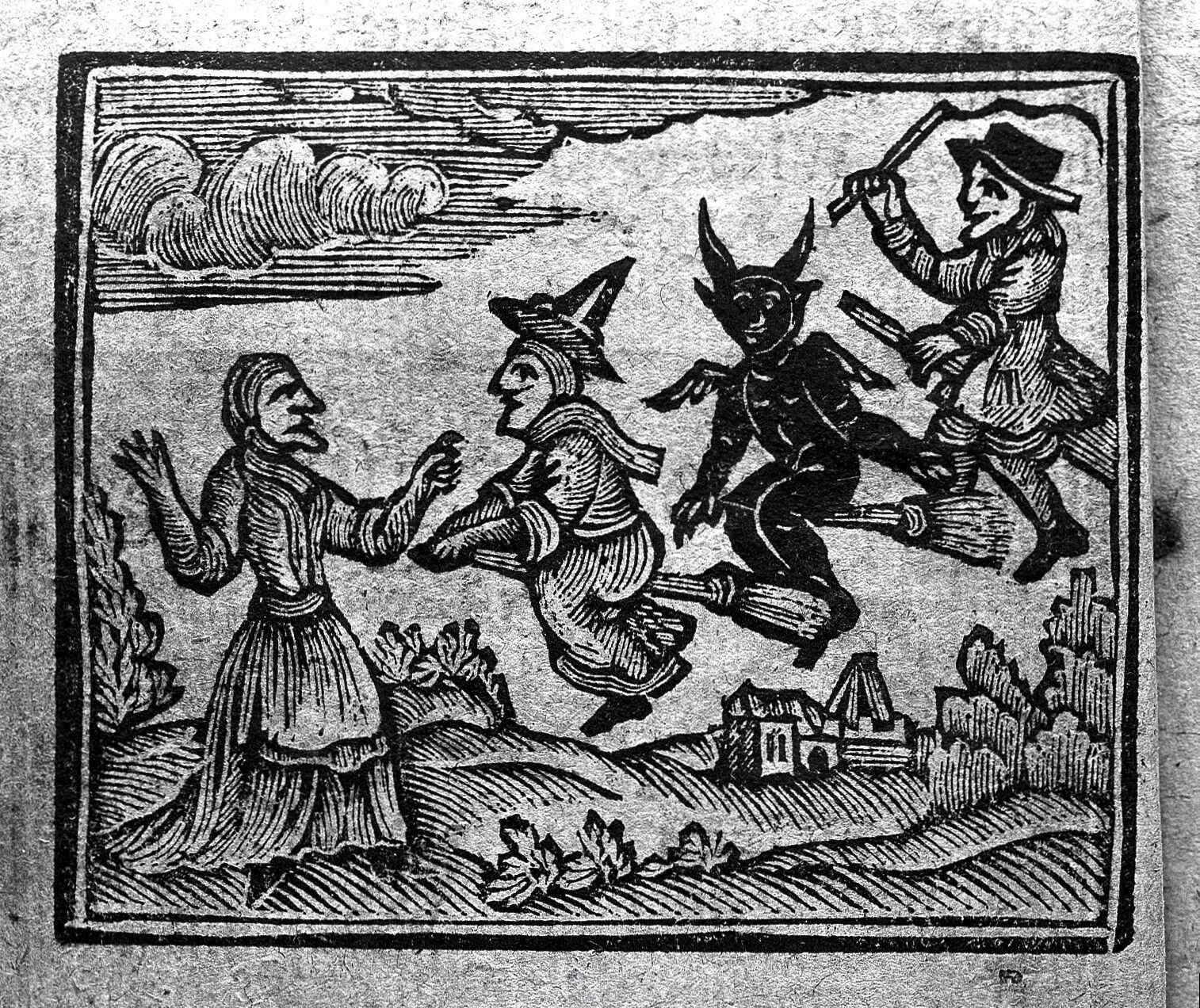
Woodcut of Witches and the Devil flying on broomsticks, c.1720. ©Wellcome Collection.
MID SUFFOLK
Across Mid Suffolk fear, belief, and authority shaped accusations in towns and rural communities.
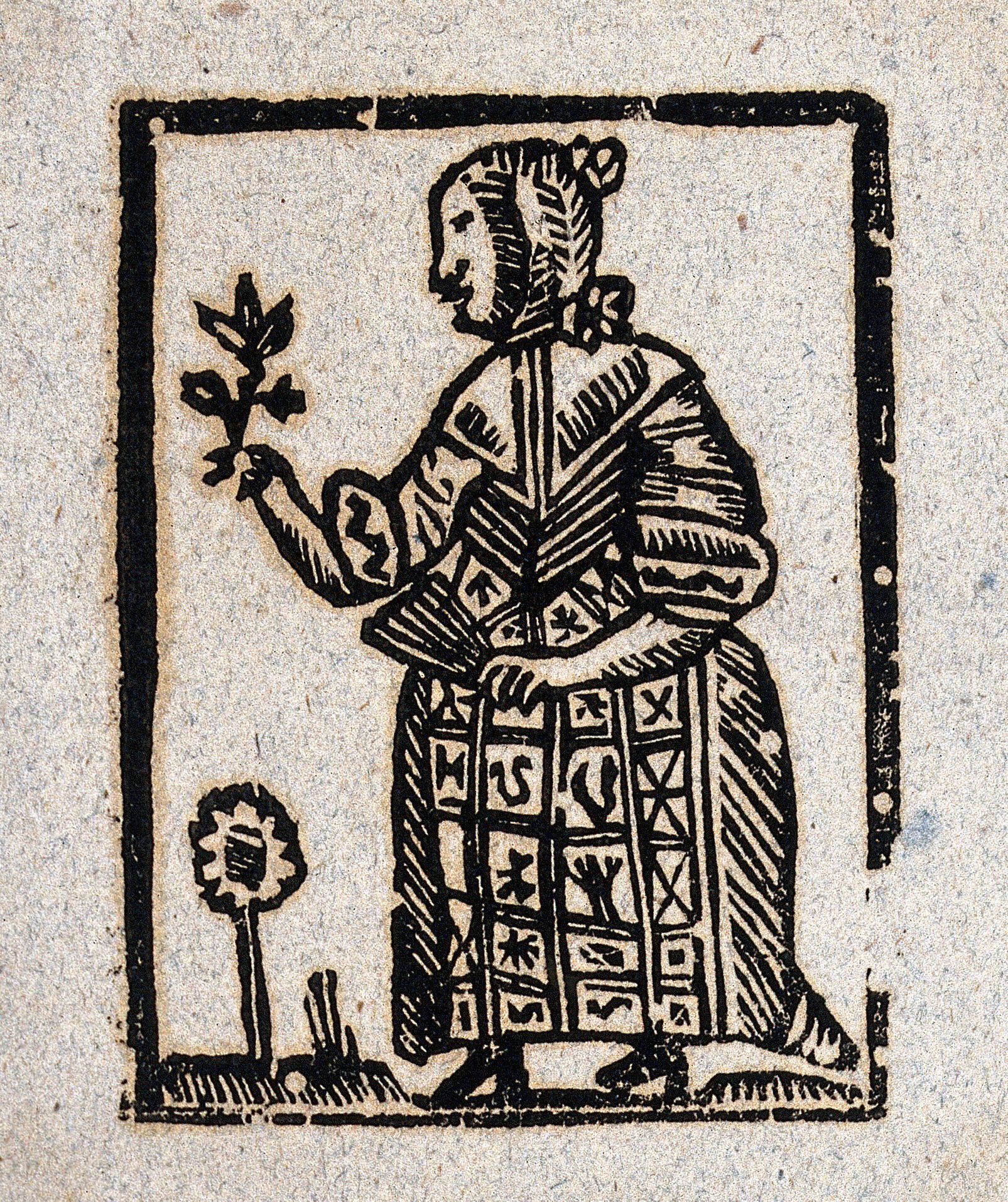
A witch holding a plant. Woodcut, ca. 1700-1720. ©Wellcome Collection.
BABERGH
In Babergh accusations spread through villages and parishes, and local communities became entangled in the trials.
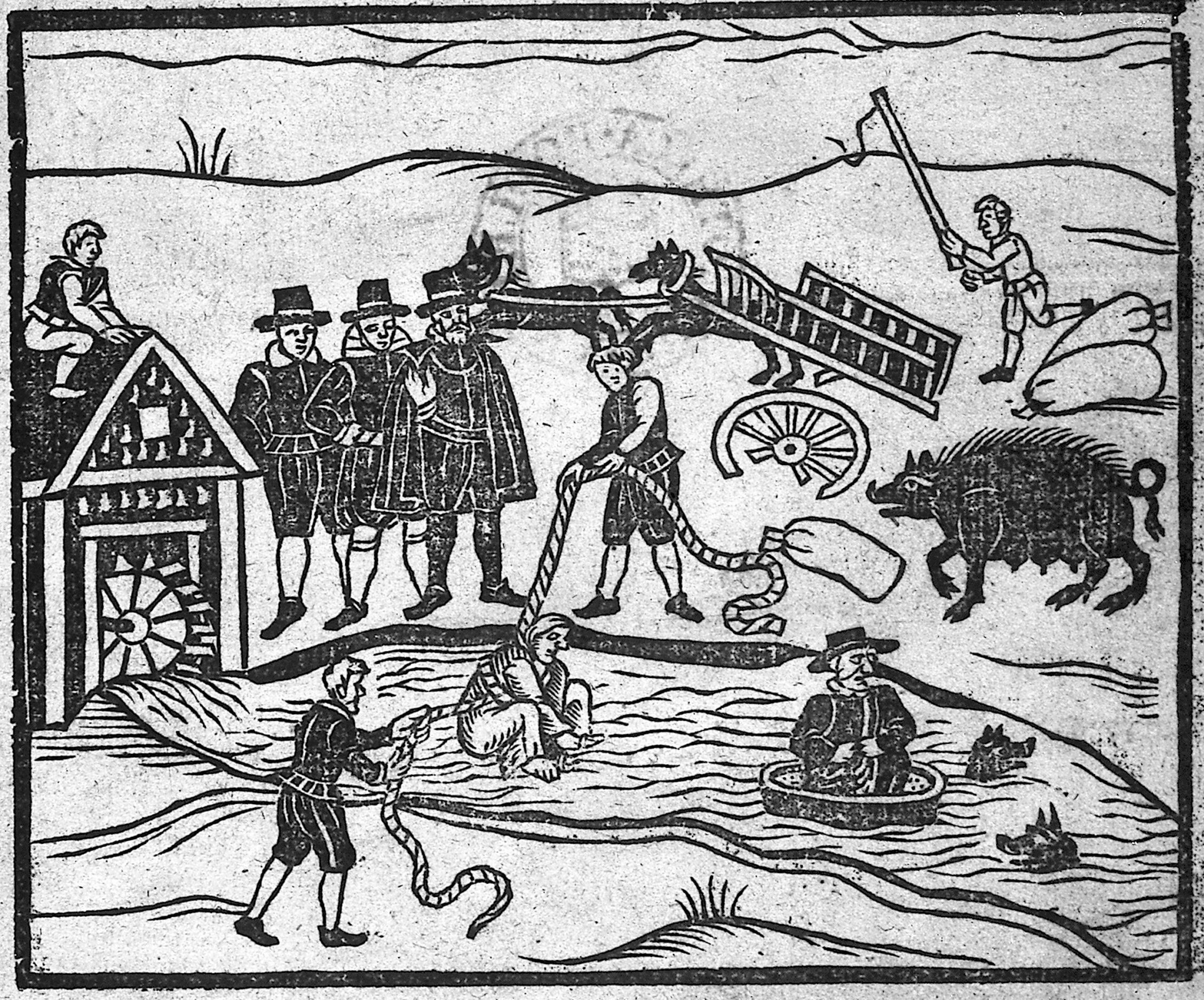
From Witches apprehended, examined and executed, 1613. ©Wellcome Collection
WEST SUFFOLK
With Bury St Edmunds, seat of the county assizes, located in West Suffolk this part of the county has strong links with the trials and accusations.
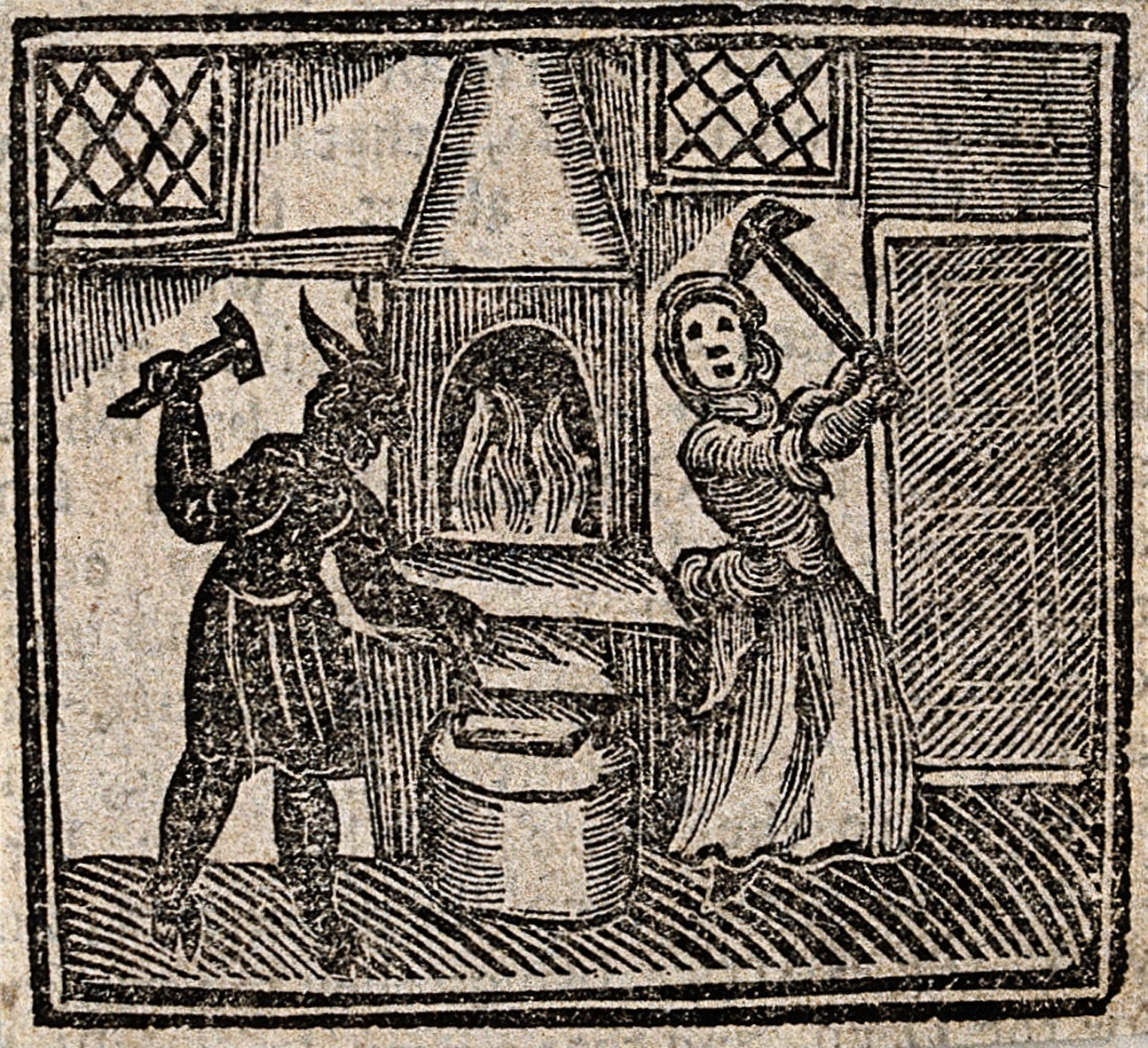
The devil and a witch making a nail ©Wellcome Collection.
IPSWICH
Home of the ‘Ipswich Witch’ Mary (Mother) Lakeland, burnt alive at the stake as punishment for petty treason.
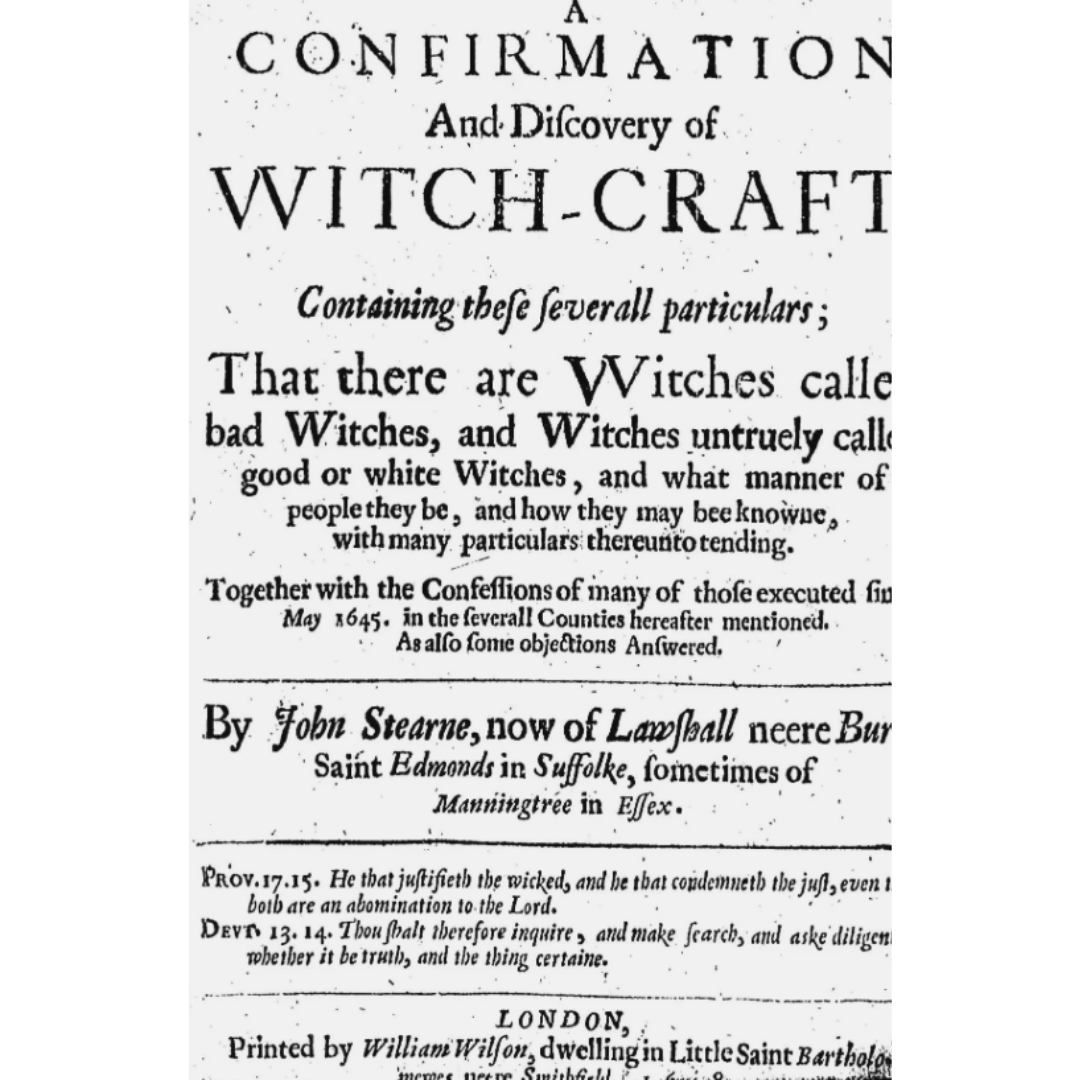
Copy of front cover of A Confirmation and Discovery of Witchcraft, published in 1648
EAST SUFFOLK
When Hopkins and Stearne divided the County Hopkins travelled on through East Suffolk alone.
From Witches apprehended, examined and executed, 1613. ©Wellcome Collection
LEARNING
Learn more about the wider context of the Suffolk witch trials, including how accusations worked, why they spread, and how this history is understood today.